Children
Looking after Children’s Teeth – Top Tips
Using A Dummy
Whilst many parents worry that the use of a dummy or thumb/finger sucking will damage a child’s teeth it actually won’t. What it can do is create an overbite which is when teeth separate to make space for a dummy or thumb. As a dummy can also affect speech development, it is advised that you stop your child’s dummy before 12 months. Orthodontic dummies are recommended for children who suck their thumb/fingers. It is easier to take their dummy away, not so easy to take their finger!
Teaching Your Child to Brush
It is important children learn how to brush their teeth properly with a manual toothbrush. Let them do it in front of a mirror and guide their hand, to begin with so that they can get the right action. It is recommended that an adult starts a child off brushing up until the age of 8.
Make Brushing Fun
There are so many great apps out there that encourage children to brush properly and for the correct amount of time, from singing to egg timers. Disclosing tablets can be a fun way to check where the child is missing when brushing and these tablets are made from food dye so they are safe, but fun.
Stay away from the fizzy drinks!
Fizzy drinks are acidic and can wear away the enamel coating of teeth. Whilst drinking low sugar or diet versions does reduce the sugar content, they are still very acidic and can cause erosion. (Yes – this does include fizzy water!)
Visiting the Dentist
You should try to take your child to the dentist as soon as their milk teeth have appeared even having a quick visit and letting the dentist have a quick look is great for future practice, however during these difficult times appointments may be in short supply so regular brushing is key.
Cleaning teeth early
Whether you are feeding your child with a bottle or breastfeeding there is still sugar in milk. It is advised in this instance to give your child some cooled boiled water if aged below 6 months just to rinse their mouth out after this feed (this can be swallowed), this will help prevent decay. Make sure you still clean the teeth with a very small amount of age-appropriate fluoride toothpaste, morning and night.
Juice of any kind should never be put into a baby’s bottle. Water is recommended between meals. Juice can be taken with meals.
Preventing Fear
If a parent has a lasting fear of the dentist, it’s important they try not to pass this onto their children. So, try to make each visit a positive experience – be bright, be happy and don’t forget to remind them they’ll usually get a well-done sticker too!
Rinsing
A lot of people, children included, do rinse with water after brushing their teeth. It is important that they don’t do this too much as rinsing with water after brushing their teeth will rinse away the fluoride and make it less effective!
Mouthwash
If you have decided you would like you or your child to use mouthwash, do not use this after brushing your teeth. Mouthwash can be used alongside brushing but not instead of brushing. The best time to use mouthwash would be after a meal, throughout the day or night. If using after food rinse thoroughly with water first, to get rid of all the bits, then use the mouthwash. (Note – chlorhexidine containing mouthwashes can cause staining with longer-term use)
There are some really fun things out there on the market for kids, explore the net, and have fun!
When should you start to bring your child to the dentist?
Bring your child to the dentist when the first milk teeth appear. This is so they become familiar with the environment and get to know us. We can help prevent decay and identify any oral health problems at an early stage. We will encourage your child to let us take a look in their mouth but we would never force them.
When you visit the dentist, be positive about it and make the trip fun. This will stop your child worrying about future visits. Try not to pass on any of your own fears you may have.
Bring your child for regular dental check-ups as advised by the dentist. NHS dental care for children is free.
Bring your child along to our Oral Health Educator – for help with brushing, diet and much more.
Brushing
Start brushing your baby’s teeth with fluoride toothpaste as soon as the first milk tooth breaks through. It’s important to use a fluoride paste as this helps prevent and control tooth decay. Children should use just a smear of toothpaste. Children aged between three and six years should use a pea-sized blob of toothpaste.
All children can use family toothpaste as long as you supervise brushing with them until the age of seven and make sure they don’t eat or lick toothpaste from the tube.
Children under the age of six who don’t have tooth decay can use a children’s toothpaste if you prefer, but make sure it contains at least 1,000ppm fluoride. Check the toothpaste packet for this information.
It is important that you brush your child’s teeth for about two minutes twice a day, ideally, once just before bedtime and at least one other time during the day.
Encourage them to spit out excess toothpaste but not to rinse with lots of water. Rinsing with water after tooth brushing will wash away the fluoride and reduce its benefits.
Supervise tooth brushing until your child is seven or eight years old, either by brushing their teeth yourself or, if they brush their own teeth, by watching how they do it. From the age of seven or eight they should be able to brush their own teeth, but it’s still a good idea to watch them now and again to make sure they brush properly and for about two minutes.

Letter from the Tooth Fairy!
If you’d like to download a print off a letter from the tooth fairy to give to your child, please click the link below!
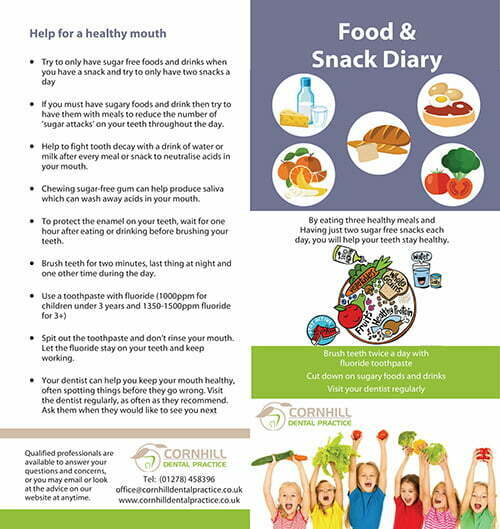
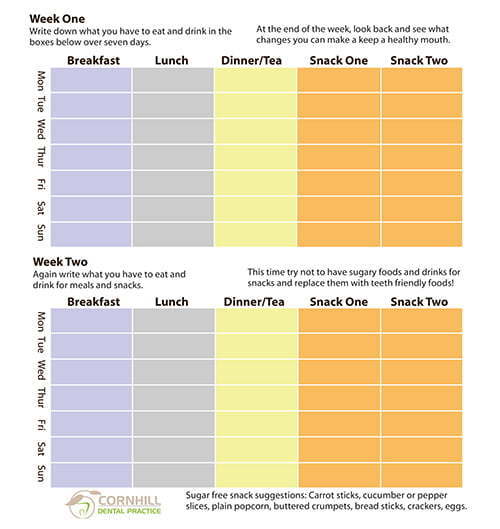
Food Diaries
Click on the images below to download a food diary to help keep track of what your child is eating each day!